
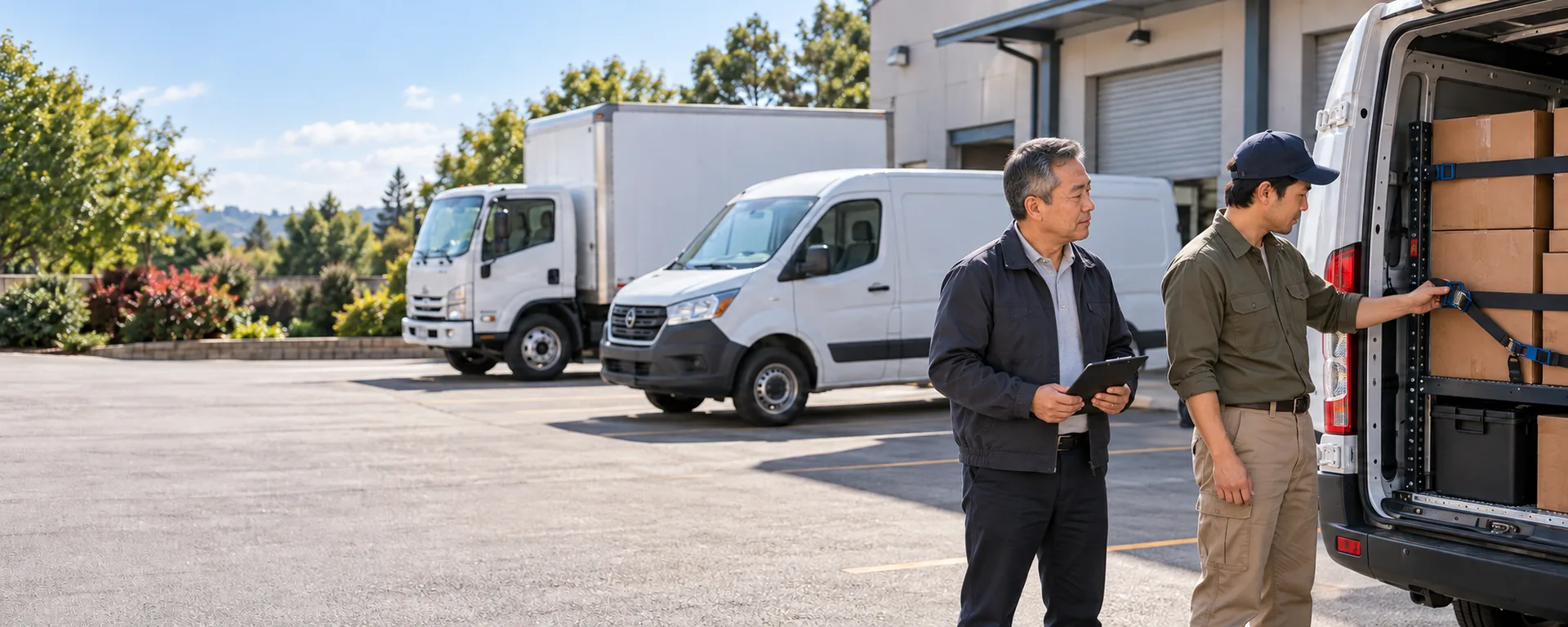
结论先说
管你这台车的,可能是两套门槛,也可能只是一套。 德州交通法典 §548.001(1) 把州内的「commercial motor vehicle」划在超过 26,000 磅(或载客超过 15 人、或载需挂标牌的危险品);而联邦 49 CFR 390.5 把州际运输的同一个词划在10,001 磅及以上。两个数字量的不是同一条轴,所以不能概括成「德州管得松」或「联邦管得严」——要看你这台车跑的是州内还是跨州、运的是货还是人、是为他人运输还是运自己的货。
责任那一侧的下限倒是一条:德州交通法典 §601.072(a-1) 写定 $30,000 / $60,000 / $25,000,俗称 30/60/25。而如果你落进 TxDMV 的登记范围,买到保单只是第一步——§643.103(a) 要求承运人把保险证明备案到主管机关(原文 A motor carrier that is required to register under Subchapter B must file with the department evidence of insurance)——法定义务的主体是承运人,不是保险人;而 TxDMV 自己那一页写明实际由保险人电子送达,TxDMV 自己那一页写的是「before you begin you must have a valid USDOT Number」。
还有一件要先摆正的:很多介绍把商业车险讲成「自有车、租用车、非自有车」三段, 而德州保险厅(TDI)自己的分类不是三段——它是三种保单加六类车辆类型, 「非自有车」在那里是六类之一。本页把这几层拆开,不判断你这台车该买哪一种, 那要看车辆用途与你那份保单,属持牌人与个案判断。
谁该看这一页
适合在休斯顿有一台或几台公司车、送货车、工程车的小生意主,想先弄清自己落在哪一层门槛里、哪些事是法规定的、哪些事是保单定的。
不适合用它判断自己这一件会不会赔、或者替代备案。承保与赔付由保险人依保单决定,本页不做任何预测、也不代表任何保险人作出承诺。也不适合用来自行判断要不要登记为承运人——那要看车辆实际用途,请找持牌人,并以主管机关的答复为准。
车登记在公司名下,就算商业车险了吗?
直答:不等于。德州法里「车归谁」和「谁在用这台车」是两条分开写的线。
交通法典 §601.002(9) 给「owner」列了三种人,而第一种并不是唯一一种:
"Owner" means: (A) the person who holds legal title to a motor vehicle; (B) the purchaser or lessee of a motor vehicle subject to an agreement for the conditional sale or lease of the vehicle, if the person has: (i) the right to purchase the vehicle on performing conditions stated in the agreement; and (ii) an immediate right to possess the vehicle; or (C) a mortgagor of a motor vehicle who is entitled to possession of the vehicle.
三款并列,意味着「过户到公司名下」只落在 (A) 这一款。 分期买车、融资租赁、带抵押的车,在 §601.002(9)(B) 与 (C) 之下同样算 owner。
而「谁在开」那一条写在 §601.076(2)。owner's policy 要赔的人不只是具名被保险人:
pay, on behalf of the named insured or another person who, as insured, uses a covered motor vehicle with the express or implied permission of the named insured, amounts the insured becomes obligated to pay as damages arising out of the ownership, maintenance, or use of the motor vehicle in the United States or Canada, subject to the amounts, excluding interest and costs, and exclusions of Section 601.072.
⚠️ 注意这一句里的两个限定:一是 express or implied permission——默示许可也算;二是地域写的是 in the United States or Canada,不包括墨西哥。这两个限定都在条文里,不是推论。
在德州,「车过户到公司名下」不等于「这台车按商业车险投保」—— 交通法典 §601.002(9) 把 owner 列成三款并列,过户只落在 (A) 款, 而 §601.076(2) 要赔的范围按「使用人有具名被保险人的明示或默示许可」划, 所以决定保障形状的是车辆归属与使用方式两件事,不是登记证上那一个名字。
德州的 26,000 磅和联邦的 10,001 磅,为什么不是同一件事?
直答:因为它们是两套规则,各自管一段,而同一台车可能只踩中一条。
德州这一侧的定义在 §548.001(1),而第 643 章的登记义务正是引这一节:
"Commercial motor vehicle" means a self-propelled or towed vehicle, other than a farm vehicle with a gross weight, registered weight, or gross weight rating of less than 48,000 pounds, that is used on a public highway to transport passengers or cargo if: (A) the vehicle, including a school activity bus as defined in Section 541.201, or combination of vehicles has a gross weight, registered weight, or gross weight rating of more than 26,000 pounds; (B) the vehicle, including a school activity bus as defined in Section 541.201, is designed or used to transport more than 15 passengers, including the driver; or (C) the vehicle is used to transport hazardous materials in a quantity requiring placarding by a regulation issued under the Hazardous Materials Transportation Act (49 U.S.C. Section 5101 et seq.).
联邦这一侧的定义在 49 CFR 390.5,同一个词,四项判据,而第一项的数字两边不同——州内那条线是 26,000 磅,联邦这条是 10,001 磅:
Commercial motor vehicle means any self-propelled or towed motor vehicle used on a highway in interstate commerce to transport passengers or property when the vehicle— (1) Has a gross vehicle weight rating or gross combination weight rating, or gross vehicle weight or gross combination weight, of 4,536 kg (10,001 pounds) or more, whichever is greater; or (2) Is designed or used to transport more than 8 passengers (including the driver) for compensation; or (3) Is designed or used to transport more than 15 passengers, including the driver, and is not used to transport passengers for compensation; or (4) Is used in transporting material found by the Secretary of Transportation to be hazardous under 49 U.S.C. 5103 and transported in a quantity requiring placarding under regulations prescribed by the Secretary under 49 CFR, subtitle B, chapter I, subchapter C.
两套规则可以逐项并排看:
| 比什么 | 德州州内(§548.001(1),第 643 章引用) | 联邦州际(49 CFR 390.5) |
|---|---|---|
| 重量线 | 超过 26,000 磅 | 10,001 磅及以上 |
| 载客(收费) | 条文未按「收费」分档 | 超过 8 人(含司机)即算 |
| 载客(不收费) | 超过 15 人(含司机) | 超过 15 人(含司机) |
| 危险品 | 需挂标牌的数量 | 需挂标牌的数量 |
| 农用车 | 总重低于 48,000 磅的农用车排除在外 | 另有 Covered farm vehicle 专门定义,本页不列 |
| 适用前提 | 在 public highway 上运人或运货 | in interstate commerce |
⚠️ 最后一行是整张表的关键。 联邦那一列的定义开头就写着 used on a highway in interstate commerce——它只在州际运输这个前提下成立。而 49 CFR 390.5 自己把「州际」和「州内」分开定义:Intrastate commerce means any trade, traffic, or transportation in any State which is not described in the term "interstate commerce."
所以一台 12,000 磅的货车,只在休斯顿城里送货,不落进 §548.001(1)(没超过 26,000 磅)。⚠️ 而它落不落进 49 CFR 390.5 的 interstate commerce 前提,不看车出不出州:该定义第 (3) 项把 Between two places in a State as part of trade, traffic, or transportation originating or terminating outside the State or the United States. 也算在内。只运本州起止的货、且这一段不属于一条起点或终点在州外的货流时,才不落进。 这不代表它不需要保险——§601.051 对所有 motor vehicle 都要求建立财务责任。
德州州内与联邦州际对「营运车」的重量线不同—— §548.001(1) 划在超过 26,000 磅,49 CFR 390.5 划在 10,001 磅及以上, 而联邦那一条的定义以
in interstate commerce为前提。 所以同一台车在两套规则下的身份可能相反,只能并列陈述,不能概括成哪一边更严。
德州的法定责任下限是多少,这个数是哪张纸定的?
直答:§601.072(a-1) 写定 30/60/25,这是交通法典定的法定下限。
先看它挂在哪条义务上。§601.051 并列五款,保险只是其中第一款:合规保单(第 (1) 款)、依 §601.121 备案的保证书、依 §601.122 或 §601.123 的两种押金、依 §601.124 的自保。所以「建立财务责任」不等于「买保险」。
额度本身在 §601.072(a-1):
(a-1) Effective January 1, 2011, the minimum amounts of motor vehicle liability insurance coverage required to establish financial responsibility under this chapter are: (1) $30,000 for bodily injury to or death of one person in one collision; (2) $60,000 for bodily injury to or death of two or more persons in one collision, subject to the amount provided by Subdivision (1) for bodily injury to or death of one of the persons; and (3) $25,000 for damage to or destruction of property of others in one collision.
三个数都带着自己的计量单位:第 (1) 款按「一次碰撞中一个人」、第 (2) 款按「一次碰撞中两人或以上」且受第 (1) 款约束、第 (3) 款按「一次碰撞中他人财产」。这三句话里「一次碰撞」出现了三遍,而不是「一个保单年度」。
同一节的 (b) 款还写了一层可以被除外的:条文允许所要求的保障就一次碰撞除外头一段责任——一人伤亡的头 $250、两人或以上伤亡的头 $500(且受 (a-1)(1) 约束)、他人财产损害的头 $250。⚠️ 这一款不是在说某个数,是在说条文允许保单把头一段排除掉。 那几个数是 §601.072(b) 写明的法定额度。
而 §601.051 的例外清单里没有商业车辆这一类。 §601.052(a) 并列五项: (1) 收藏车(退役军车或满 25 年、且 used only for exhibitions, club activities, parades, and other functions of public interest and not for regular transportation、并由车主向主管机关递交宣誓书); (2) 邻里电动车;(2-a) 高尔夫球车;(2-b) 越野车; (3) 志愿消防队名下的车。 ⚠️ 第 (3) 项还有一道回扣:§601.052(b) 写明 (a)(3) does not exempt from the requirement of Section 601.051 a person who is operating a vehicle described by that subsection——车免了,开车的人不免。 本页在 §601.052(a) 这五项里查过、未找到针对商业车辆的例外;这是本页的检索范围,不是关于德州法律的断言。
而没有建立财务责任就上路的后果写在 §601.191:第一次是 a fine of not less than $175 or more than $350;§601.191(c) 对已有前科的改为 not less than $350 or more than $1,000;§601.191(d) 允许法院对无力缴纳的初犯减到 $175 以下。这几个数是罚金区间,由法条定。
德州的法定最低责任额由交通法典 §601.072(a-1) 写定为 $30,000 / $60,000 / $25,000,三款都按「一次碰撞」计,不按保单年度计; 而 §601.051 并列五种建立财务责任的方式,保险只是其中第一款。 这些数由法条写明。
监管方把商业车险分成几类?
直答:德州保险厅列的是三种保单加六类车辆类型,而「自有、租用、非自有」三段式不是它的分类。
德州保险厅在《2024 年商业车险双年报》里列的三种保单,各一句:
There are three main types of commercial auto policies: • Business auto: Covers most types of commercial vehicles. • Motor carrier: Covers truckers and can include coverage for cargo. • Auto dealers: Covers auto dealerships and includes general liability coverage.
⚠️ 这三句只写了各覆盖什么,没有写「什么情况下必须用哪一张」,所以本页不替你选。 另外,includes general liability coverage 这半句只写在 Auto dealers 那一句上; 报告对另两种保单没有写这一句,也没有写它们不含——本页只陈述原文写了什么、没写什么。
而车辆是按六类分的,「非自有车」只是其中一类:
| TDI 的六类车辆类型 | 原文里装的是什么 |
|---|---|
| ① 卡车、牵引车与挂车 | 分 Truckers 与 Non-truckers。Truckers 的原文是 Covers autos used to haul or transport goods, materials, or commodities for another, other than autos used in moving operations.——为他人拉货,但搬运业务用车排除在外。Non-truckers 含 manufacturers, contractors, food delivery, specialized delivery, farmers, and dump trucks |
| ② 私家乘用车 | 四轮车,含皮卡、厢式车与 SUV |
| ③ 公共用车 | 出租车、礼车、巴士(含校车与教会巴士)、拼车车辆 |
| ④ 特种车 | 特殊用途与杂项车辆,原文举救护、消防、执法 |
| ⑤ 非自有车 | 租来的车,加上雇主对员工自有车在办公务时的非自有责任(原文见下一节) |
| ⑥ 车行风险 | 车行、加油站、停车场、修车厂 |
三段式最容易误导的地方在第五类:很多人以为「租来的车」和「员工自己的车」 是两段不同的东西,而 TDI 把它们并在同一类里。
在德州读商业车险,不能用「自有车、租用车、非自有车」这个三段式去对—— 德州保险厅《2024 年商业车险双年报》列的是三种保单与六类车辆类型, 而租来的车与员工自己的车被并在「非自有车」同一类里。 所以按三段式去数自己有几段,会在第五类上数错。
「非自有车」为什么把两件事装在一起?
直答:因为对保单来说它们是同一个问题——车不是你的,责任可能是你的。
TDI 对第五类的原文是:
Non-owned autos: Hired autos and employers’ non-ownership liability for employee-owned autos used in the course of business.
拆开看是两种来源:
| 车从哪来 | TDI 的说法 | 常见场景 |
|---|---|---|
| 租来的 | Hired autos |
临时租一辆货车送货、长期租赁车队 |
| 员工自己的 | employers’ non-ownership liability for employee-owned autos used in the course of business |
员工开自己的车去客户那里、去取货、去送件 |
关键限定在后半句:used in the course of business。 不是「员工有车」就算,是那辆车在办公务的时候。
⚠️ 而这条限定的边界,这份报告一个字都没写:通勤算不算、顺路替公司办事算不算、 员工自己的保单与公司那一段谁先赔、员工保单赔完之后公司这一段从哪里接上。 本页在这份双年报里查过、未找到这四问的答案,所以本页不写,也不替任何一次具体事故归位—— 那要看当时的事实与你保单的措辞,由持牌人与理赔方按个案定。
在德州判断「员工开自己的车出事,公司这边有没有保障」, 不是看车登记在谁名下——德州保险厅把这种情形归入「非自有车」一类, 原文的限定是
autos used in the course of business。 落点在那辆车当时是不是在办公务,不在车的产权。
落进 TxDMV 登记范围的是哪几种情形?
直答:TxDMV 自己列了六种,而其中一种与车重完全无关。
第 643 章的义务句在 §643.051:
(a) A motor carrier may not operate a commercial motor vehicle, as defined by Section 548.001, on a road or highway of this state unless the carrier registers with the department under this subchapter. (b) A motor carrier may not operate a vehicle, regardless of size of the vehicle, to transport household goods for compensation unless the carrier registers with the department under this subchapter.
(b) 款里的 regardless of size of the vehicle 是本节最容易漏的一句——搬家具这件事上,车多小都不免。
TxDMV 的「TxDMV Number」页把六种情形列在一起(检索日 2026-10-26):
Operate a commercial motor vehicle (or a combination of vehicles) with a gross weight, registered weight or gross-weight rating exceeding 26,000 pounds Transport hazardous materials in a quantity that requires placarding Operate a farm vehicle with a gross weight, registered weight or gross weight rating of 48,000 pounds or more Operate a vehicle designed to transport more than 15 passengers, including the driver Operate a commercial school bus Transport household goods for compensation, regardless of vehicle weight
同一页还写明登记证的期限选项与随车件:
Motor carrier registration (TxDMV Number) is available for seven calendar days, 90 days, one year or two years.
A current copy of the insurance Cab Card must be kept in the commercial vehicle at all times.
而 §643.103(b) 把「随车」这件事写成法定义务:A motor carrier shall keep evidence of insurance in a form approved by the department in the cab of each vehicle requiring registration the carrier operates. §643.103(c) 另写明主管机关对一次备案 may charge a fee of $100——那是法条写明的备案收费额,不是上限(原文给的是一个定额)。
买到保单,备案就算做完了吗?
直答:不算。保单和备案是两件事,而第二件由保险人替你送、由你负责盯。
§643.103(a) 列了四个必须备案的时点:初次登记时、因未保持连续登记而重新登记时、更换保险人时、以及变更所有权时。TxDMV 的「Becoming a Texas Motor Carrier (Intrastate)」页把这件事说得更直接:
Yes – and it's not enough to just buy a policy. TxDMV has to receive your insurance filing electronically from your insurer before your application can be granted.
If you switch insurance companies, make sure the new Form E is filed before the old one expires.
Not under state law. You're responsible for making sure your insurance stays filed with TxDMV 24/7.
同一页还把「号」和「许可」分成两件事:
Not yet. A USDOT Number is not operating authority – it's basically an identifier. Next step: Operating Authority.
⚠️ 原文里的破折号(–)是原件带的,本页逐字引用未改;撇号按缓存实取件是直撇号('),本页照取。
联邦那一侧也有一条时限:49 CFR 387.7(b)(1) 规定保单与保证必须持续有效至终止,而终止要由任一方 giving 35 days' notice in writing to the other,并且 The 35 days' notice shall commence to run from the date the notice is transmitted. §387.7(d) 则把「证明」具体到两张表单:MCS-90(保险人出的批单)与 MCS-82(保证人出的保证书)。
顺带一条年度动作:TxDMV 那一页写明 To keep that USDOT Number active, you'll need to update Form MCS-150 with FMCSA every two years.——两年一次,不是一次办完。
跨州跑货的那条联邦限额,是哪一行?
直答:49 CFR 387.9 的 Table 1 第 (1) 行,$750,000;而那一列的列名是 January 1, 1985。
§387.3(a) 划出适用范围:This subpart applies to for-hire motor carriers operating motor vehicles transporting property in interstate or foreign commerce.
§387.3(c)(1) 写明 The rules in this subpart do not apply to a motor vehicle that has a gross vehicle weight rating (GVWR) of less than 10,001 pounds.——但那一款有自己的回扣,要连第二句一起读:紧跟的第二句写明指定的那几类危险品货载(Division 1.1/1.2/1.3、Division 2.3 Hazard Zone A、Division 6.1 Packing Group I Hazard Zone A、Class 7 的公路管控量)不享受这个排除。
§387.9 的 Table 1 第 (1) 行,三列逐字为:For-hire (In interstate or foreign commerce, with a gross vehicle weight rating of 10,001 or more pounds) / Property (nonhazardous) / $750,000。
⚠️ 那个 $750,000 所在的列,列名写的是 January 1, 1985,意思是「自该日起适用的最低额」。它不是修订日,也不是版本号。同表另有三行分别为 5,000,000、1,000,000、5,000,000,对应危险品与油类的几种情形,本页不复制那三行的货物描述原文。
而 §387.5 对 For-hire carriage 的定义是这一节的分界线:the business of transporting, for compensation, the goods or property of another.——运「别人的」货、收报酬。运自己的货属 Private motor carrier(49 CFR 390.5:a person who provides transportation of property or passengers, by commercial motor vehicle, and is not a for-hire motor carrier),不落在 §387.3(a) 这一支,但可能落在 §387.3(b) 的危险品那一支——⚠️ 而 §387.3(c)(2) 另把州内运输非散装油品、非散装危险品、危险物质或废弃物排除在外(原文 do not apply to the transportation of non-bulk oil, non-bulk hazardous materials, substances, or wastes in intrastate commerce,该款另有自己的例外)。
费率程序里排在前面的是哪几步?
直答:报告列了六步,而第三步有一个具体门槛。
⚠️ 先看这一段自己的两句限定。 报告在列这六步之前先写了一句 Insurer rating plans can vary significantly.,而那句列举的开头是 A procedure to rate liability coverage for trucks, tractors, and trailers usually involves—— 写的是 usually,而且只针对卡车、牵引车与挂车这一类。 这六步不是一套通用程序:
- 按车辆大小与商业用途分类;
- 考虑行业类型,例如 truckers、制造商、承包商;
- 按行驶半径(radius of operations)定区域或分区;
- 按选定的限额、免赔额与车队规模调整;
- 并入其他费率修正;
- 加上保险公司的运营费用。
第三步那条有一个具体门槛,而它是本页在这一节里唯一的数字:
| 分区 | TDI 的判据(原文) |
|---|---|
| 非分区费率(Non-zone-rated) | Lightweight trucks (and associated trailers), plus vehicles that don’t regularly operate beyond a 200-mile radius. |
| 分区费率(Zone-rated) | Heavier vehicles that regularly operate beyond a 200-mile radius. |
那 200 英里是把车分到哪一侧的分类门槛。 本页只写这个门槛是什么、它把车分到哪一侧。
至于公共用车那一类,原文写的是 The rating procedure for the public auto vehicle type is similar, but seating capacity and use type are considered instead of size, business use, and industry.—— ⚠️ 注意开头是 is similar:程序仍然相似,只是把「大小、商业用途、行业」这三项换成了「座位数与用途」, 不是说那三问对公共用车不存在。
这一页说明什么、不说明什么
说明的:哪几个数是法条写明的(30/60/25、罚金区间、$750,000 那一行与它的列名、TxDMV 的六种触发情形、$100 的法定备案收费、35 天与两年这两个时限),它们各自的条号,以及德州保险厅对商业车辆的三保单/六类分法。
不说明的五件:
- 你这台车该买哪一种保单、要不要哪一张批单。 那要看车辆用途、驾驶人与你那份保单的条款,属持牌人与个案判断。报告只写了三种保单各覆盖什么,没有写什么情况下必须用哪一张。
- 你这一件会不会赔、赔多少。 承保与赔付由保险人依保单决定,本页不做任何预测。
- Covered Auto Symbols(符号 1–9、19)各自的释义。 那些符号出自商业车险表格,不是公开法条;本页不复制表格原文、也不自编释义,它们在你那份保单的 Covered Autos 一节里逐一列明。读法见商业车险的 Covered Auto 符号。
- 「办公务期间」这条限定的具体边界。 通勤、顺路办事、谁先赔、公司那一段从哪里接上——本页在双年报里查过、未找到,所以不写。
- 你要不要登记为承运人。 本页只列条文与官方页面写的触发情形,最终以主管机关的答复为准。
常见误判
| 误判 | 应读的位置 |
|---|---|
| 车过户到公司名下就是商业车险 | §601.002(9) 把 owner 列成三款并列,过户只是 (A) 款;保障形状另看 §601.076(2) |
| 只有具名被保险人开才算保障范围内 | §601.076(2) 写的是 express or implied permission,默示许可也在范围内 |
| 德州管得比联邦松 | 两套规则量的不是同一条轴:§548.001(1) 是州内 26,000 磅,49 CFR 390.5 是 10,001 磅且以 interstate commerce 为前提——而 interstate commerce 按该定义第 (3) 项不以车出不出州为准 |
| 商业车险就是自有、租用、非自有三段 | TDI 列的是三种保单+六类车辆类型;非自有车只是其中一类 |
| 租来的车和员工的车是两回事 | TDI 把它们并在同一类(非自有车)里 |
| 买了商业车险就有一般责任险了 | includes general liability coverage 这半句只写在 Auto dealers 那一句上;报告对另两张没有写这一句 |
| 送餐、承包商都算 truckers | TDI 把它们列在 Non-truckers;Truckers 的原文是为他人拉货,且搬运业务用车排除在外 |
| 校车、教会巴士算特种车 | 在 TDI 的分类里属公共用车;特种车是救护、消防、执法那一类 |
| 行驶半径只是随便问问 | 它决定走分区费率还是非分区费率,门槛是 200 英里 |
| 那六步是一套通用程序 | 原文写的是 usually,而且只针对卡车、牵引车与挂车一类;前一句还写着 Insurer rating plans can vary significantly. |
| 车不够重就不用在 TxDMV 登记 | §643.051(b) 对为报酬运送家具写的是 regardless of size of the vehicle |
| 买了保单备案就算完成 | §643.103(a) 列了四个备案时点;TxDMV 写明 it's not enough to just buy a policy |
| 有了 USDOT 号就可以上路 | TxDMV 写明 A USDOT Number is not operating authority |
| USDOT 号办一次就一直有效 | TxDMV 写明 update Form MCS-150 with FMCSA every two years |
| 30/60/25 是按一年算的 | §601.072(a-1) 三款都写 in one collision |
| 收藏车能免,公司车应该也有一条能免 | §601.052(a) 并列五项,本页在这五项里查过、未找到商业车辆那一类;第 (3) 项还有 §601.052(b) 的回扣 |
| $750,000 是 2026 年的新规定 | 那一列的列名是 January 1, 1985,它是适用起算日,不是修订日 |
| 跨州跑就一定适用 49 CFR 387 A 分部 | §387.3(a) 限 for-hire 运送 property;§387.3(c)(1) 另排除 GVWR 低于 10,001 磅的车,而那一款第二句又把指定危险品货载拉回来 |
FAQ
我公司有两台送货面包车,只在休斯顿城里跑,需要登记为承运人吗? 要看两件事能不能对上条文。交通法典 §643.051(a) 的义务以 §548.001(1) 的「commercial motor vehicle」为前提,而那一节的重量线是超过 26,000 磅;§643.051(b) 另有一条与车重无关——为报酬运送 household goods,regardless of size of the vehicle 都要登记。TxDMV 的「TxDMV Number」页把触发情形列成六项,含危险品需挂标牌、载客超过 15 人(含司机)、商业校车、48,000 磅及以上的农用车。本页不替你判断自己落不落进去,请把车辆重量、实际用途与客户类型交给持牌人,并以主管机关的答复为准。
德州的 30/60/25 对商业车也一样吗? §601.072(a-1) 是按「建立本章所要求的财务责任」写的最低额,三款分别为 $30,000(一次碰撞中一人的身体伤害或死亡)、$60,000(一次碰撞中两人或以上,且受第 (1) 款约束)、$25,000(一次碰撞中他人财产的损坏或毁损)。而落进第 643 章的承运人另有一层:§643.101(a) 写明主管机关为每一台需登记车辆另设一个责任保险额度,§643.101(b) 在开头写明 Except as provided by Section 643.1015 之后,规定该额度不得超过依联邦规章(由 49 U.S.C. 第 13906(a)(1) 条授权制定)所要求的额度。所以法定下限与承运人应备额度是两个问题,不能用一个数回答。
换了保险公司,我自己要做什么? §643.103(a)(3) 把「更换保险人」列为必须备案的时点之一。TxDMV 写明备案由保险人电子送达主管机关,并提醒 make sure the new Form E is filed before the old one expires,同时写明责任在你:You're responsible for making sure your insurance stays filed with TxDMV 24/7。所以这件事的顺序是:新的先到位,旧的再过期。 怎么核、在哪核,见DOT 号与保险备案。
货物(cargo)保障是自动有的吗? 德州保险厅那份报告对 Motor carrier 保单写的是 Covers truckers and can include coverage for cargo.——用的是 can include,不是「含」。 具体那一张保单上有没有、怎么写,看你那份保单。
商业车险也有碰撞险和综合险吗? 同一份报告给了这两项的定义:碰撞险是 Pays to repair or replace the insured's auto if damaged in an auto accident.,综合险是 Pays to repair or replace the insured's auto if stolen, damaged from weather, or other non-collision cause.
内链
- DOT 号与保险备案——USDOT、TxDMV 证书与 Form E 的先后顺序
- 商业车险与个人车险的分界——两套门槛在同一台车上怎么并存
- 商业车险的 Covered Auto 符号——保单怎么指认「哪些车算在内」
- 德州车险责任基础——30/60/25 在个人车那一侧的读法
- 别人开我的车——「默示许可」这条线在个人车上的样子
- 雇员开公司车出事——驾驶人那一侧单独算的那几条
下一步
带上车辆清单(每台车的 VIN、品牌、总重或总重额定值)、实际用途说明(州内还是跨州、运自己的货还是别人的货、有没有载客或危险品)、现有保单声明页与全部批单、以及任何已有的 USDOT 号或 TxDMV 证书号,通过联系页面预约逐项对照。持牌人:杨德清,德州执照号 1515542;持牌信息见团队与持牌信息。保险经由 SLOOD, L.L.C.(德州 General Lines Agency #1557787) 安排,商号 Allwin Insurance Agency。具体承保与赔付由保险人依保单决定。
资料来源与更新(可公开)
| 编号 | 来源与定位 | 本页采用范围 |
|---|---|---|
| 1 | 德州交通法典第 601 章 | 本页取的是 §601.002(9)(A)(B)(C) 三款 owner 定义逐字;§601.051 与 §601.051(1)–(5) 五款逐字;§601.052(a)(1)–(3)(含 (2-a)、(2-b))五项与 §601.052(b) 回扣;§601.072(a-1)(1)(2)(3) 三档最低额逐字;§601.072(b)(1)(2)(3) 可除外额度逐字;§601.076(2) owner's policy 应赔范围逐字(含 express or implied permission 与 in the United States or Canada 两个限定);§601.191(b)(c)(d) 罚金区间。本页不引该章其余各节 |
| 2 | 德州交通法典第 643 章 | 本页取的是 §643.051(a) 与 (b) 登记义务逐字(含 regardless of size of the vehicle);§643.101(a) 与 §643.101(b)(含开头 Except as provided by Section 643.1015 与它自引的 49 U.S.C. §13906(a)(1));§643.103(a)(1)–(4) 四个备案时点(转述);§643.103(b) 随车件逐字;§643.103(c) 法定备案收费。本页不引该章其余各节 |
| 3 | 德州交通法典 §548.001 | 本页取的是 §548.001(1) 及 (A)(B)(C) 州内「commercial motor vehicle」定义逐字,含农用车 48,000 磅的排除句。该章其余各节本页不引 |
| 4 | 49 CFR Part 387 Subpart A | 本页取的是 §387.3(a) 适用范围逐字;§387.3(b) 危险品那一支(仅提及);§387.3(c)(1) 两句都引(排除句 + 危险品回扣句);§387.5 For-hire carriage 定义逐字;§387.7(b)(1) 35 天书面通知逐字;§387.7(d)(1) 与 (d)(2) MCS-90 与 MCS-82;§387.9 Table 1 第 (1) 行三列逐字,并标明该金额所在列的列名为 January 1, 1985。同表第 (2)(3)(4) 行只引金额、不复制货物描述原文。§387.11 及其后各节本页不引 |
| 5 | 49 CFR 390.5 | 本页取的是 Commercial motor vehicle 四项判据逐字;Private motor carrier 定义逐字;Intrastate commerce 定义逐字。该节其余定义本页不引;Covered farm vehicle 本页不引 |
| 6 | 德州保险厅《2024 Commercial Auto Biennial Report》(November 2024,Publication ID: TDICABR \ | 1124) |
| 7 | TxDMV 官方页面「TxDMV Number」(页面标题逐字 `TxDMV Number \ | TxDMV.gov`,网址 https://www.txdmv.gov/motor-carriers/txdmv-number ) |
| 8 | TxDMV 官方页面「Becoming a Texas Motor Carrier (Intrastate)」(页面标题逐字 `Becoming a Texas Motor Carrier (Intrastate) \ | TxDMV.gov`,网址 https://www.txdmv.gov/motor-carriers/how-to-be-a-motor-carrier ) |